Social Information
_width-1240.png)
_width-1240.png)
The following topics are covered in the social information chapter, with material topics highlighted in bold:
Our employees
Sonovaʼs workforce of more than 19,000 employees is central to the Groupʼs success. Across research and development, manufacturing, distribution, and the sales and service of hearing care and consumer hearing products, our employees contribute to innovation, customer support, and the achievement of our business objectives. Whether working at production sites, in our Retail stores, or in corporate and functional roles, our people play a vital role across the organization. Sonova places a strong emphasis on employee wellbeing, safety, and development, integrating these priorities into the way we operate and manage our business.
Number of employees (FTEs)
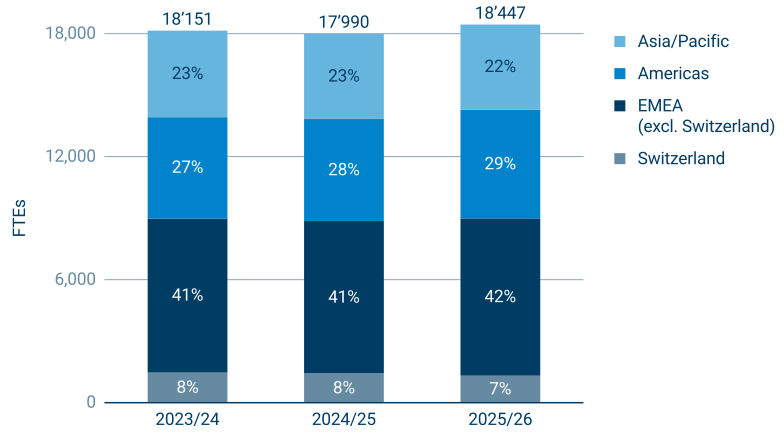
As of the end of the 2025/26 financial year, Sonova had 18,447 employees (FTE). During this financial year, several smaller businesses were acquired in EMEA, the Americas, and Asia/Pacific. All of these companies acquired are in the business of distributing and servicing hearing instruments.
Employees by region
Data externally assured (limited assurance)
FTE (end of period)1, 2 | ||||||
2025/26 | 2024/25 | 2023/24 | ||||
Total | 18,447 | 17,990 | 18,151 | |||
Switzerland | 1,317 | 1,434 | 1,469 | |||
EMEA (excl. Switzerland) | 7,675 | 7,427 | 7,514 | |||
Americas | 5,305 | 4,984 | 4,945 | |||
Asia / Pacific | 4,150 | 4,145 | 4,223 |
1)For definition and methodology see Sustainability note 3 - Employees.
2)For related employee information in the financial statement see Note 7.1 Number of employees.
Headcount (end of period)1 | ||||||
2025/26 | 2024/25 | 2023/24 | ||||
Total | 19,604 | 19,327 | 19,314 | |||
Switzerland | 1,397 | 1,517 | 1,559 | |||
EMEA (excl. Switzerland) | 8,673 | 8,495 | 8,431 | |||
Americas | 5,281 | 5,002 | 4,979 | |||
Asia / Pacific | 4,253 | 4,313 | 4,345 |
Employees by significant countries (10% of total employees) | ||||||
Germany | 3,123 | 3,058 | 3,043 | |||
United States | 2,651 | 2,798 | 2,928 |
1)For definition and methodology see Sustainability note 3 - Employees.
While permanent employment is the primary business model, temporary and external workers are used where necessary to meet business needs (e.g., project-related). Minimum standards for working conditions are applied consistently, irrespective of employment type.
Employees by employment contract and by gender
Data externally assured (limited assurance)
Headcount (end of period)1 | ||||||||||||
2025/26 | 2024/25 | 2023/24 | ||||||||||
Women | Men | Total | Women | Men | Total | Women | Men | Total | ||||
Total | 13,005 | 6,599 | 19,604 | 12,839 | 6,488 | 19,327 | 12,875 | 6,439 | 19,314 | |||
Permanent | 12,357 | 6,213 | 18,570 | 12,208 | 6,127 | 18,335 | 12,260 | 6,106 | 18,366 | |||
Temporary | 632 | 382 | 1,014 | 605 | 356 | 961 | 615 | 333 | 948 | |||
Non-guaranteed hours2 | 16 | 4 | 20 | 26 | 5 | 31 |
1)For definition and methodology see Sustainability note 3 - Employees.
2)Categorization of non-guaranteed for the financial year 2023/24 not available (included under temporary employees).
Over the past two years, employee turnover has increased moderately, mainly reflecting restructuring measures, which have become the main driver of total exits. At the same time, voluntary turnover has continued to decline, from 9.7% to 9.3%, showing improved retention. This positive development is supported by strong engagement levels and employee advocacy, indicating a generally positive day-to-day employee experience.
Employees turnover rates
Data externally assured (limited assurance)
FTE & % of FTE 1 | ||||||
2025/26 | 2024/25 | 2023/24 | ||||
Number of employees who left Sonova (FTE) | 2,751 | 2,677 | 2,501 | |||
Employee turnover rate (%) | 15.3 | 14.7 | 14.3 | |||
Employee voluntary turnover rate (%) | 9.3 | 9.7 | 10.5 |
1)For definition and methodology see Sustainability note 3 - Employees.
At the end of the 2025/26 financial year, Sonova had 3,810 external employees (non-employees) as consultants through service agreements or via staff leasing. Primary functions with non-employees include IT, sales, marketing, and finance.
Non-employees
Data externally assured (limited assurance)
Headcount (end of period)1 | ||||||
2025/26 | 2024/25 | 2023/24 | ||||
Number of non-employees | 3,810 | 3,496 | 3,608 |
1)For definition and methodology see Sustainability note 3 - Employees.
Equal treatment and employment opportunities
Sonova is committed to the principles of equal treatment and equal employment opportunities, which are firmly anchored in our global Code of Conduct. We maintain a zero tolerance policy for discrimination and harassment and have established procedures for raising and addressing concerns. Sonova is an equal opportunity employer. Employment‑related decisions are based on objective, job‑relevant criteria such as qualifications, skills, performance, and experience. We are committed to fair, merit‑based employment practices and to providing a respectful working environment in which all employees are treated with dignity and have the opportunity to succeed, in line with applicable laws and regulations. Our commitment to equal opportunities applies across the entire employee experience, from hiring and development to career advancement. We strive to foster a workplace where employees feel safe, valued and supported in realizing their potential. In building an inclusive work environment, Sonova does not apply quotas, set-asides, nor do we make employment-related decisions based on sex or any other protected characteristic. Our global equal treatment and employment opportunities strategy is built on the following pillars:
- Attraction and development: We stand for equal opportunities in how we attract and develop talent.
- Training: We train our employees and people leaders on the importance of equal opportunities.
- Communication: We drive transparent communication to foster an inclusive culture, promote equal opportunities in the workplace, and encourage role model behavior.
- Supportive environment: We strive to make our physical, technical, and cultural work environment inclusive.
Sonova is committed to fair, merit-based employment practices and to providing equal opportunity across its global workforce. Employment decisions are grounded in objective, job‑related criteria, and our approach is applied consistently across all regions, in line with applicable local laws and regulations. Where appropriate and legally permissible, Sonova supports initiatives that foster equal treatment and inclusive dialogue, with implementation tailored to local legislative and cultural contexts. In addition, we provide opportunities for employees to share perspectives and participate in company‑wide dialogue. Voluntary employee resource groups—including the Global Wo/Menʼs Network, the Global OutLoud Network, and the Global Hearing Loss Network—are open to all employees and serve as platforms for connection and knowledge‑sharing. Together, these groups had more than 300 members by the end of the 2025/26 financial year.
To support a healthy and inclusive work environment, Sonova offers a range of flexible working arrangements, including part‑time employment options, flexible working hours, breastfeeding rooms, childcare support measures, and extended parental leave, subject to local availability and regulations. In addition, at selected locations, meeting rooms are equipped with our Roger™ wireless communication devices to improve sound clarity and accessibility for colleagues who use hearing aids.
As part of Sonovaʼs commitment to equal pay for equal work, fair compensation principles are embedded in our job evaluation and grading framework, as well as in our hiring and salary review processes. In Switzerland, Sonova received certification from the Fair-ON-Pay Association for our equal pay analysis. In the United Kingdom, Sonova published a gender pay gap report in accordance with statutory requirements.
Key ESG targets:
We increase the share of women in senior management globally to 35% by 2028/29.*
We increase the share of women in middle management globally to 50% by 2028/29.*
* For consistency, the share of women is calculated at a global level. Actions to support these objectives are implemented only in jurisdictions where they are permissible under local laws, regulations, and employment practices.
Gender diversity across the organization 2025/26
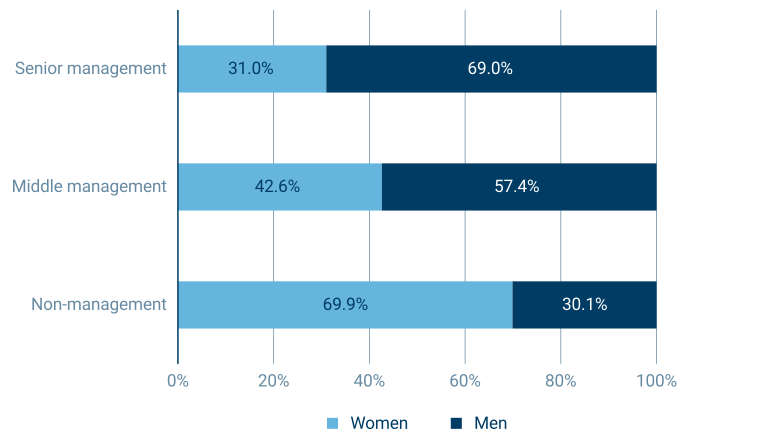
Sonova monitors gender representation across management and governance levels as part of its workforce reporting. As of the end of the 2025/26 financial year, women represented three of the eight members (37.5%) of the Sonova Board of Directors and three of the eight members (37.5%) of the Sonova Group Executive Management. Women accounted for 31.0% of senior management positions and 42.6% of middle management roles across the Group. Further details on the composition of the Board of Directors and the Sonova Group Executive Management are provided in the Corporate Governance report.
Women in management positions
Data externally assured (limited assurance)
Number and % of headcount (globally) within respective management position1 | |||||||||
2025/26 | 2024/25 | 2023/24 | |||||||
Number | % | Number | % | Number | % | ||||
Women in senior management (globally) | 66 | 31.0 | 62 | 30.5 | 62 | 28.3 | |||
Women in middle management (globally) | 763 | 42.6 | 737 | 41.6 | 669 | 39.9 | |||
Women in non-management (globally) | 12,783 | 69.9 | 12,612 | 70.0 | 12,658 | 70.3 | |||
1)For definition and methodology see Sustainability note 3 - Employees.
Employees by age
Data externally assured (limited assurance)
% of headcount1 | ||||||
2025/26 | 2024/25 | 2023/24 | ||||
under 30 years old | 19.1 | 18.8 | 19.8 | |||
30-50 years old | 58.1 | 58.8 | 58.6 | |||
over 50 years old | 22.8 | 22.4 | 21.6 |
1)For definition and methodology see Sustainability note 3 - Employees.
Employee rights and engagement
Sonova is committed to respecting and supporting human rights across our global operations and throughout its value chain. This commitment is guided by applicable laws and regulations, as well as by internationally recognized human rights and labor standards. Our commitment to human rights is reflected in key policies, including our Code of Conduct and the Human Rights Policy, aligned with globally recognized standards. Sonovaʼs Code of Conduct applies to both employees and business partners and sets out expectations for ethical behavior and accountability across all interactions. In addition, the Supplier Code of Conduct defines requirements for responsible sourcing and the protection of workers within the supply chain, aligning supplier practices with Sonovaʼs internal standards and promoting consistent ethical conduct across the value chain. Our policies strictly prohibit exploitative practices, including child labor, forced labor, and human trafficking. In addition, our Code of Conduct addresses discrimination, and emphasizes equal opportunities, supported by various trainings and processes.
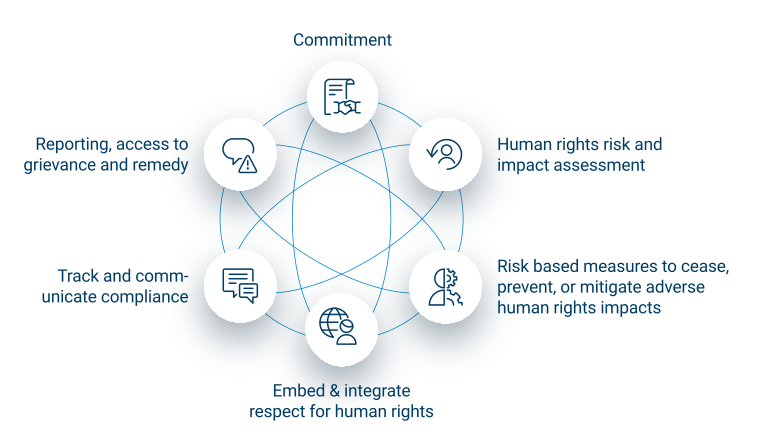
Sonovaʼs Human Rights Policy governs our human rights due diligence (HRDD) along the entire value chain, delivered through an HRDD framework that aligns with the United Nations Guiding Principles on Business and Human Rights (UNGP). It also outlines the salient human rights issues along the value chain, including our employees. A list of these issues is available in the Sustainability note 6 – Salient human rights issues.
Our human rights due diligence framework
Sonovaʼs commitment to human rights is further supported by its SpeakUp Policy and SpeakUp process. The policy defines grievance mechanisms and outlines access to SpeakUp, Sonovaʼs anonymous reporting platform, which is available to employees, contractors, and other stakeholders to raise concerns, including potential human rights‑related issues. The policy sets out the SpeakUp process, and steps to address concerns, including remediation, corrective action, and disciplinary measures when necessary. The policy explicitly prohibits retaliation against anyone who reports a concern in good faith. To support awareness and effective implementation, employees receive annual training on relevant policies. The mandatory Code of Conduct training covers human rights topics and, in the 2025/26 financial year, included a specific focus on modern slavery risks. Oversight of the SpeakUp process, as well as human rights monitoring and implementation, sits with Sonovaʼs Chief Legal and Compliance Officer. The Audit Committee reviews the SpeakUp process on a quarterly basis. Further information on SpeakUp and policy‑related training is provided in the Business ethics section.
Sonova conducts social audits and human rights assessments to identify and evaluate potential risks related to employeesʼ working conditions across its operations. Where issues are identified, corrective actions are implemented to address areas such as working conditions, wage practices, and non‑discrimination. Further details on the social audit conducted during the 2025/26 financial year are provided in the Working conditions section. In addition, Sonova performs internal audits at both Group‑function and Group‑company level to monitor compliance with local labor laws and internal requirements. In the 2025/26 financial year, human rights considerations were incorporated into the internal audit scope for selected facility audits.
Sonova reports on its human rights due diligence practices in compliance with local regulations, including the UKʼs Modern Slavery Act, the Norwegian Transparency Act, Canadaʼs Fighting Against Forced Labour and Child Labour in Supply Chains Act, the California Transparency in Supply Chains Act, and Australiaʼs Modern Slavery Act.
Sonova recognizes employee engagement as a key input to its strategy and approach to identifying and managing impacts. We engage with employees through multiple channels, including quarterly engagement and pulse surveys, established human resources processes, local dialogue with unions and employee representatives, and ongoing exchange with our employee resource groups. These global and local engagement activities provide valuable insights that help us prioritize issues and implement meaningful improvement actions. Overall responsibility for employee engagement sits with Sonovaʼs Chief Human Resources Officer.
In addition to formal engagement mechanisms, Sonova actively encourages employees to contribute ideas to address business challenges, improve the customer experience, and improve operational efficiency. Through our continuous improvement mindset, supported by leadership development and change‑management practices, we aim to ensure that actions are practical, scalable, and responsive to evolving internal and external requirements across all levels of the organization.
Talent management
Strategy, governance, and IROs
Sonova operates in a highly competitive environment characterized by increasing constraints in the availability of specialized talent. To deliver on the Groupʼs strategy and accelerate the development of innovative solutions for customers and consumers, a strong focus on talent attraction, development, and retention is critical. Sonovaʼs talent management framework is designed to attract individuals with the right skills, build and deepen critical capabilities, and ensure a robust leadership pipeline. This is achieved through the structured alignment of performance management, skills development, succession planning, and career progression with initiatives that support a positive employee experience, sustained engagement, and employer attractiveness.
Material impacts, risks, and opportunities related to talent management:
IRO (risk assessed as if unmitigated) | Occurrence | Expected time horizon | ||
Risk: Attraction and retention Lack of training and skills development as well as career and development opportunities could negatively affect talent recruitment and retention, hence negatively influence the ability to innovate, risking the viability of the business. | Own operations | Increase in medium- to long-term |
Sonova applies structured, forward looking talent management processes to attract, develop, and retain talent, with particular focus on critical skill areas such as audiology and research and development. Talent development is supported through internal mobility opportunities and by fostering a culture in which employees take responsibility for building their skills and actively managing their career progression. In parallel, Sonova maintains a continuous focus on employee engagement and the working environment. Together, these efforts support the retention of key talent, help sustain the Groupʼs competitive position and long‑term success, and contribute to mitigating the identified material talent‑related risk.
Sonovaʼs Chief Human Resources Officer is responsible for overseeing talent management, including setting the strategic direction and monitoring performance. Monthly key talent metrics, including employee turnover rate and internal recruitment rate, are reviewed at global, business, and local levels to track the effectiveness of our initiatives. Updates on key talent metrics are communicated monthly to the Group Executives and regularly to the Board of Directors. Risks and mitigation actions are reported regularly to the Audit Committee through the enterprise risk management process.
Policies and actions
Our commitments to our employees are governed by our Code of Conduct and our Human Rights Policy. Detailed information about these policies can be found in the Our employees and Business ethics sections of this Report. In addition, various internal policies and standard operating procedures govern specific aspects of working experience.
In the 2025/26 financial year, Sonova further expanded Sonovaʼs leadership curriculum to strengthen internal talent development and reinforce a culture of continuous learning. Through the Leadership Excellence Hub complemented by digital platforms such as LinkedIn Learning, employees have access to scalable, forward‑looking development opportunities aligned with the Groupʼs strategic growth priorities. The Leadership Excellence Hub integrates immersive workshops, live webinars, and structured leadership programs designed to build personal, team, and business leadership capabilities across all career stages. LinkedIn Learning complements our internal programs by offering access to more than 15,000 courses spanning professional growth, emerging technologies, creative capabilities, and leadership essentials — enabling employees to take ownership of their development.
To further strengthen people leadership capabilities across the organization, we focused on several targeted initiatives during the 2025/26 financial year: The internal trainer pool was expanded to scale the “I Learn” personal leadership program across locations, equipping employees with key collaboration skills, resilience, and practical tools to enhance their day‑to‑day impact. In addition, Sonova launched “Passport to Lead”, a structured 12‑month onboarding journey for newly promoted people leaders, designed to build leadership mindset, confidence, and practical skills from the outset. Furthermore, 70 of Sonovaʼs most senior leaders participated in a comprehensive 360‑degree feedback process, receiving structured input from peers, team members, internal customers, and their own leaders to support individual development planning. Together, these initiatives support Sonovaʼs strategic objective of developing and retaining talent internally by providing clear leadership development pathways. By strengthening leadership capability at multiple levels of the organization, Sonova addresses talent‑related risks and reinforces long‑term organizational resilience.
To reinforce the importance of a learning culture, we hosted our second Global Learning Week in January 2026. More than 4,800 colleagues participated in interactive sessions covering personal leadership, change agility, innovation & AI, customer focus, collaboration, and the on-quality, on-time mindset. This global initiative further reinforces continuous learning as a key contributor to performance, innovation, and a long-term sustainable growth.
Sonovaʼs performance management process supports a culture of accountability and sustained performance across the organization. Throughout the financial year, people leaders and employees follow a structured performance management cycle. This cycle begins with the definition of clear and measurable objectives, includes a dedicated mid-year check-in to review progress and alignment, and concludes with a comprehensive year-end performance appraisal. This process supports consistent and transparent dialogue on expectations and outcomes and helps employees understand how their individual contributions support value creation for customers, consumers, and shareholders. It also reinforces the behaviors that shape how we lead and collaborate across teams. Employees are encouraged to initiate development and career conversations at any time, enabling timely feedback, skills development, and alignment with evolving business needs. Together, these practices strengthen leadership capability, support agile succession planning, and underpin Sonovaʼs approach to developing a resilient, inclusive, and high-performing workforce that delivers sustainable long-term value for employees, customers, consumers and shareholders.
During the 2025/26 financial year, Sonova further evolved its Employee Listening Strategy to increase agility, strengthen responsiveness to employee feedback, and sharpen the focus on shared, company‑wide themes. As part of this evolution, HearMe, Sonovaʼs employee engagement survey, transitioned from an annual to a quarterly format and is complemented by a short quarterly Pulse survey. The revised HearMe survey is more focused and streamlined, concentrating on the most relevant questions linked to prioritized global focus areas, team experience, and employee engagement. Based on the results, leaders are empowered to define targeted HearMe actions that address the specific needs of their teams. Pulse surveys are then used to assess the perceived impact of these actions, providing timely insights that support continuous adjustment and reinforcement of engagement initiatives.
Performance metrics and targets
Employee engagement
More than 18,500 eligible employees were invited to participate in HearMe. Participation remained consistently high at 87% in 2025/26, indicating continued engagement with the employee listening process.
Key ESG target: We aim to maintain or improve our annual employee engagement score year-over-year.
The engagement score methodology measures three core questions covering employer advocacy, sense of accomplishment, and discretionary efforts. The 2025/26 engagement score is 68%, a score on the same level as measured in 2024/25, and we therefore achieved our target. We are committed to further strengthening our employee engagement, with actions in place to maintain or improve our employee engagement score for 2026/27.
Employee engagement score
Data externally assured (limited assurance)
Favorable engagement answers as % of survey eligible headcount1 | ||||||
2025/26 | 2024/25 | 2023/242 | ||||
Employee engagement score | 68 | 68 |
1)For definition and methodology see Sustainability note 3 - Employees.
2)The employee engagement scores for 2025/26 and 2024/25 are not comparable with 2023/24 due to the change of provider and methodology.
Learning, performance and development
Learning and development are integrated into daily work, with on-the-job experience forming the foundation, and complemented by mentoring, regular feedback, and targeted formal training. This approach reflects a qualitative application of the 70–20–10 framework combining experiential, social and formal learning. In the 2025/26 financial year, more than 3,500 employees completed approximately 18,000 hours of learning through the Leadership Excellence Hub learning. In addition, employees completed a further 6,500 hours of training via LinkedIn Learning.
In 2025, 96.4% of eligible employees completed their performance appraisal. This strong participation rate – without significant gender differences – demonstrates a deeply embedded commitment to clear performance standards, accountability, and fairness across the organization.
Performance appraisal
Data externally assured (limited assurance)
% of eligible employees with performance appraisal1 | ||||||
2025/26 | 2024/25 | 2023/24 | ||||
Performance appraisal rate | 96.4 | 99.3 | 98.7 |
1)For definition and methodology see Sustainability note 3 - Employees.
Talent attraction
During the 2025/26 financial year, 4,044 employees joined Sonova and more than 59% of job openings for all leadership positions were filled by existing Sonova employees. Internal moves are influenced by different site demands and talent pipeline/supply dynamics. Compared to the prior year, this rate was lower, mainly due to the build‑up of leadership roles at our newer sites in Mexico and Germany. In Germany, changes were primarily driven by decreased internal managerial movements, while external hiring activity remained broadly stable. In Mexico, the greater reliance on external managerial hiring reflects the siteʼs early stage of development, where external leadership capability is required while the internal succession pipeline continues to mature.
New hire rate
Data externally assured (limited assurance)
% of new hired headcount1 | ||||||
2025/26 | 2024/25 | 2023/24 | ||||
Gender | ||||||
Women (globally) | 66.5 | 66.9 | 68.7 | |||
Men (globally) | 33.5 | 33.1 | 31.3 | |||
Age | ||||||
under 30 years old | 42.9 | 39.7 | 38.2 | |||
30-50 years old | 45.4 | 46.7 | 48.8 | |||
over 50 years old | 11.7 | 13.6 | 13.0 |
1)For definition and methodology see Sustainability note 3 - Employees.
Internal leadership recruitment rate (ILRR)
Data externally assured (limited assurance)
% of headcount1 | ||||||
2025/26 | 2024/25 | 2023/24 | ||||
Total internal hires to leadership positions (%) | 59.4 | 65.4 | 64.9 |
1)For definition and methodology see Sustainability note 3 - Employees.
Working conditions
Strategy, governance, and IROs
Sonova is committed to fostering a working environment that supports employee development and wellbeing, which underpins accountability for delivering value to customers, consumers, and shareholders. Our commitment to responsible employment practices encompasses a comprehensive definition of working conditions, which includes secure employment, working time, adequate wages, freedom of association, the existence of work councils, social dialog, consultation and participation rights of workers, collective bargaining, employee wellbeing, family-related leave, prevention of child and forced labor, adequate housing, and privacy.
Material impacts, risks, and opportunities related to working conditions:
IRO | Occurrence | Expected time horizon | ||
Positive and negative impact: Employees wellbeing Sonova’s working conditions can impact on employees and their families. Depending on the nature of this impact, this can have a stabilizing or destabilizing effect on the employees, their families and their communities. | Own operations | No change |
Sonova is committed to fostering a workplace that respects employeesʼ rights and provides job stability, equitable compensation, and fair working conditions, while supporting open and constructive dialogue. We aim to create an environment in which employees feel valued and supported in balancing performance expectations with their professional and personal needs. We recognize that a safe and healthy working environment, with a strong focus on employee wellbeing, enables our employees to engage effectively, deliver business outcomes, and contribute to long‑term value creation for customers, consumers, and shareholders. Our wellbeing framework is structured around five pillars:
- Physical: nutrition, exercise, sleep, medical care and ergonomics
- Mental: relaxation, mindfulness, stress management, resilience, and mental health
- Financial: retirement and ancillary benefits
- Social: team spirit and leadership
- Purpose: purpose in life and work, beliefs & values and charitable activities
Sonovaʼs Chief Human Resources Officer is responsible for overseeing working conditions, including setting the strategic direction, providing monthly oversight, and regular tracking. Performance metrics are reviewed monthly at global, business, and local levels. The Chief Legal and Compliance Officer oversees the SpeakUp process, including our anonymous whistleblowing platform, and other human rights initiatives. Employee wellbeing is led and managed through a cross-functional global health team, supported by local champions in our Group Companies. In addition, we conduct internal audits both for Group functions and at a Group company level to ensure compliance with local labor laws and our own regulations.
Policies and actions
Our commitment to our employees is described in our Code of Conduct and our Human Rights Policy. Key aspects include respecting the personal integrity of our employees, freedom of association, and promoting human rights. Detailed information about the policies can be found in the Our employees and the Business ethics sections. Multiple internal policies and standard operating procedures govern specific aspects of working conditions. They are globally standardized and locally implemented in accordance with country-specific laws and regulations. The internal policies are tailored to the diverse work needs of employees in different roles and working in various business environments.
In the majority of countries where it operates, Sonova also runs an Employee Assistance Program (EAP) that provides anonymous counseling services for employees and immediate family members with personal concerns, both in and outside of work.
With the launch of our renewed strategy in March 2026, we are beginning a focused culture transformation to support Sonovaʼs growth ambition. We are strengthening an entrepreneurial way of working — faster, closer to customers, and more empowered — while maintaining the high standards that define Sonova. At the core of this effort is a culture that values transparency, collaboration, accountability, and entrepreneurial thinking, empowering our people to move with speed, and make a meaningful impact for our customers and the company.
Performance metrics and targets
Collective bargaining and protecting employeesʼ rights
Key ESG target: We conduct at least one social audit per year.
During the 2025/26 financial year, we conducted one social audit, thereby achieving our target. The social audit took place in our distribution center in Erfurt, Germany, and was performed by independent auditors: members of the Association of Professional Social Compliance Auditors (APSCA). The audit, which was based on international standards, local regulations, and our internal policies, consisted in an evaluation of the workplace conditions via on-site confidential interviews with employees, documentation review, physical observations, and management interviews. Since last year, the assessment has included an additional human rights due diligence module to ensure proper local dissemination of policies and processes. On site, the auditors observed a good level of local dissemination of Sonovaʼs human rights framework, including its policies, risk assessments, and training, and confirmed the effectiveness of our grievance mechanism, SpeakUp. The facility was assessed as performing well in the areas of labor and human rights; there were no findings related to child labor, forced labor, discrimination, or freedom of association. Only minor recommendations on wages and benefits were provided to the local management. In terms of health, safety, and the environment, the facility was assessed as well-performing, although minor findings were identified (with recommended improvements) in relation to safety, and environmental inspections and training.
Sonovaʼs global grievance process, including our anonymous SpeakUp online platform, gives ample scope for raising potential human rights issues and forms part of our human rights monitoring. Information about the SpeakUp process, key policy training, and regular campaigns for awareness raising can be found in the Business ethics section.
By the end of the 2025/26 financial year, 24% of our global workforce was covered by collective bargaining agreements, and 23% of our employees are supported by workersʼ representatives. At Sonova, we are dedicated to ensuring fair compensation for our employees, utilizing external benchmark data to inform salary adjustments based on market movements. In the event of significant organizational changes, we take adaptive measures to minimize any negative impact on our employees, including early retirement offers, internal mobility opportunities, financial compensation, retraining programs, and outplacement services. In the past three financial years, there have been no significant job cuts affecting more than 1,000 employees or more than 5% of the total workforce.
Occupational health and safety
Sonova is committed to providing a safe and healthy working environment to protect employees from workplace hazards. To support this commitment, health and safety procedures are implemented across operations and distribution centers, including regular inspections to identify and assess potential risks and hazards. Sonovaʼs primary objective is to prevent workplace injuries. Where incidents do occur, they are thoroughly investigated and followed by appropriate corrective actions. Health and safety processes are managed locally: each site has a designated owner responsible for implementing the program and ensuring compliance. Safety is discussed daily at operations sites, with KPIs such as safety walks, unsafe observations, and incidents reviewed and reported weekly at the regional level. Health and safety are integral to employee and contractor training and are a key criterion in our annual internal site award. Local sites also develop action plans with training and awareness activities to further reduce exposure to risks. Employees handling chemicals or hazardous substances receive additional regular training in safe practices.
Sonovaʼs operations are generally characterized by a low level of occupational health and safety risk. The majority of work-related injuries resulting in lost time are associated with slips, trips or falls, or during goods movement, rather than with manufacturing processes. The health and safety data below covers approximately 22% of our global workforce, and focuses on employees in manufacturing, operations, and distribution roles. For the 2025/26 financial year, the scope included manufacturing sites in Switzerland, Vietnam, China, Ireland, Germany, the United States, Mexico, our operations and distribution center in the United States, and our service centers in Spain and the United Kingdom. Compared with the 2024/25 financial year, both the number of injuries and injury‑related absences decreased across the reported sites. This development reflects the continued emphasis on occupational health and safety management and preventive measures. In the 2025/26 financial year, one high‑consequence work‑related injury occurred, accounting for 32% of total working hours lost.
Occupational health and safety
Data externally assured (limited assurance)
Own employees1 | 2025/26 | 2024/25 | 2023/24 | |||
Number of work-related injuries | 13 | 27 | 17 | |||
Number of hours worked | 7,857,750 | 7,677,287 | 6,984,199 | |||
Lost-day rate (LDR) | 22.8 | 93.5 | 47.5 | |||
Lost-time injury frequency rate (LTIFR) | 1.7 | 3.5 | 2.4 | |||
Work-related fatalities | 0 | 0 | 0 |
1)For definition and methodology see Sustainability note 3 - Employees.
Working conditions in the value chain and affected communitiesʼ rights
Sonova recognizes that workers throughout its value chain play a critical role in supporting operations and achieving business objectives. Accordingly, the Groupʼs commitment to respecting human rights extends beyond its own workforce to include workers in the value chain and the communities affected by its activities.
Sonova acknowledges that potential human rights risks are more likely to arise in connection with the extraction and sourcing of materials within its supply chain. We collaborate closely with business partners including suppliers to identify and mitigate potential human rights risks over time. Our commitment to human rights is described in our Code of Conduct, Supplier Code of Conduct and Human Rights Policy. Sonovaʼs dedication to safeguarding and monitoring workersʼ rights within the upstream value chain is governed by its Supplier Code of Conduct which sets expectations for ethical labor standards and safe working conditions. This external facing policy is available in several languages to ensure that its principles are well understood by our suppliers in non-English speaking countries. The Human Rights Policy supports the key elements of the human rights due diligence (HRDD) framework, as described in the Our employees section. It outlines the key human rights risks (salient issues) identified by Sonova within its value chain; these are listed in Sustainability note 6 – Salient human rights issues. Sonovaʼs global SpeakUp policy outlines grievance mechanisms and details of our SpeakUp platform, available for all stakeholders along the value chain, including our suppliers and their employees, to voice their concerns. More information about SpeakUp and our SpeakUp Policy can be found in the Business ethics chapter.
In November 2022, Sonova conducted its second Human Rights Risk Assessment (HRRA), building on the first assessment from 2020. The HRRA covers our global value chain and ranks potential human rights issues based on the severity of the risk to potentially affected people. The assessment methods included desk research and internal workshops. A new human rights risk registry was introduced at the same time; this includes detailed information on the severity of each issue (based on scale, scope, and remediability), its likelihood of occurrence, and Sonovaʼs ability to influence it. This established a useful internal tool to systematically address and monitor risk-based measures to prevent or mitigate Sonovaʼs salient human rights issues. During the 2025/26 financial year, Sonova initiated a comprehensive renewal of the HRRA. The project considers emerging risks across our global value chain and all business units. It encompasses a remapping of Sonovaʼs value chains, interviews with internal stakeholders, a systematic assessment of human rights risks, and workshops with relevant stakeholders to validate the findings and discuss proposed corrective actions. The project is ongoing and is scheduled to conclude in the first half of the 2026/27 financial year.
Sonovaʼs due diligence process for business partners includes distributor and supplier assessments and covers human rights in two steps. Firstly, business partners are screened against sanctions and watch lists as well as adverse media articles, enabling us to identify and respond proactively to potential human rights risks and violations. Secondly, a dedicated human rights assessment is performed specifically for upstream business partners (i.e., suppliers), to evaluate them against key human rights risks, including child labor, forced labor, freedom of association, discrimination, and fair wages. This assessment is used to identify high human rights-risk suppliers and will be used for the global HRRA and for supplier engagement. For further information on supplier assessments, refer to Supplier relations. During the 2025/26 financial year, supplier due diligence was included in the annual compliance monitoring scope to ensure that the process outlined above is well disseminated locally.
Corporate citizenship
Sonova is committed to acting as a responsible corporate citizen, by supporting local communities around its sites and contributing to society more broadly. This commitment is reflected in initiatives delivered through the Hear the World Foundation, as well as through charitable activities, employee volunteering, and in‑kind and financial donations. Sonova also supports hearing‑related research projects and, at the local level, Group Companies engage with their communities through fundraising initiatives and volunteer activities.
Hear the World Foundation
The Hear the World Foundation (HTWF) focuses on increasing access to hearing care and improving the quality of life for children in low- and middle-income countries. Sonova supports HTWFʼs mission by providing funding, expertise, employee volunteers, and hearing solutions.
In the 2025/26 financial year, HTWF supported 14 projects worldwide, delivering more than 125,000 hearing screenings for newborns and children and providing pediatric hearing care, including the fitting of hearing aids, to over 2,600 children. HTWF also strengthened local capacity by enabling audiological training for 6,258 volunteers and hearing care professionals, while Sonova employees contributed more than 1,100 hours of voluntary work. Through expanded partnerships with local organizations, government partners, associations, and community stakeholders, HTWF advanced advocacy efforts and supported progress toward early identification of hearing loss and sustainable ear and hearing services for children.
Further details on HTWFʼs activities, goals, and impact in 2025/26 are available in the annual Activity Report published on the HTWF website.
Hear the World Foundation activities
Data externally assured (limited assurance)
2025/26 | 2024/25 | 2023/24 | ||||
Fitted hearing aids | 4,555 | 5,168 | 4,067 |
Our consumers
Sonovaʼs vision is to enable a world in which people can enjoy the delight of hearing and live life without limitations. Consumers are at the center of our activities, and we are committed to building trusted relationships across all points of interaction.
Consumer rights and engagement
We are committed to respecting and protecting the rights of our consumers. Sonovaʼs Code of Conduct and our Human Rights Policy govern this commitment and are aligned with relevant international frameworks. Our Human Rights Policy outlines key salient issues and applies to all aspects of Sonovaʼs operations, including its downstream value chain. A list of these issues is available in the Sustainability note 6 - Salient human rights issues. Our grievance process is defined in our SpeakUp Policy and managed through Sonovaʼs investigation process. Our SpeakUp reporting platform enables stakeholders to report concerns, including potential human rights violations, with an option to do so anonymously. The SpeakUp Policy also outlines steps for any necessary remediation, corrective action, and disciplinary measures, while ensuring protection against retaliation for good-faith reports. The Chief Legal and Compliance Officer is responsible for the monitoring and implementation of investigation processes. The concerns raised are reviewed quarterly by Sonovaʼs Audit Committee. For further details about speaking up at Sonova, please refer to the Business ethics section.
Sonova provides multiple channels for consumers to report product-related safety and quality complaints, as well as service-related complaints, by contacting the relevant support teams through the contact forms available on the brandsʼ websites or by calling dedicated customer service hotlines. We acknowledge and document all complaints in accordance with established internal procedures, assigning a unique identifier to ensure traceability. Our complaint handling teams receive, review, and evaluate complaints, further assessing them, where applicable, in relation to product safety, quality, and performance trends. We further investigate the complaints, where appropriate, to assess potential risks, identify root causes, and determine whether corrective and preventive actions are required. We also assess each complaint to determine whether it meets the criteria for reportability under applicable regulatory and legal requirements. Reportable events are escalated to the appropriate Quality, Regulatory, and Legal functions and submitted to relevant regulatory authorities within required timelines. We inform our consumers about the outcome of their complaint and any actions taken, and periodically review complaint data to identify recurring issues, emerging risks, and opportunities for continuous improvement.
Optimizing the consumerʼs experience is a critical part of Sonovaʼs corporate mission and strategy; effective consumer engagement is therefore essential to our daily work. Our Retail business operates a structured consumer experience program that gathers and combines Net Promoter scores, online ratings and reviews, and product satisfaction data to provide a consistent assessment of consumer experience at each stage of the sales and service cycle. We use these results to inform early design decisions, feature development, service optimization, and post-market surveillance: ongoing proactive monitoring of devices after they have been released into the market. These continuous improvement initiatives are managed through cross-functional teams using real-time project status dashboards reviewed in regular leadership meetings to ensure full tracking and accountability. We also actively engage with our consumers through digital media, education programs, and direct feedback channels, paying strict attention to compliance with relevant privacy and data security regulations in each case.
Access to hearing care
Strategy, governance, and IROs
Hearing loss is a growing global health challenge with significant social and economic consequences. More than 1.5 billion people worldwide experience some degree of hearing loss, with projections suggesting a rise to nearly 2.5 billion by 2050, with over 700 million people expected to require hearing care for moderate or greater loss. Despite the growing need, access to hearing care solutions remains limited: while over 400 million people could benefit from hearing aid use, only around 17% currently use them. These statistics highlight a critical gap in access and awareness of hearing care. Research also shows that hearing health challenges can begin early in life, while untreated hearing loss later in life has been linked as a risk factor for social isolation, cognitive decline and further health issues1. These findings emphasize the importance of timely, equitable access to hearing care across all stages of life.
As the global leader in innovative hearing care solutions, Sonova integrates improving access, raising awareness and reducing barriers to hearing care as core elements of its strategy and vision. These priorities not only address unmet hearing needs but also support sustainable business growth. As part of Sonovaʼs updated Group‑wide strategy presented in March 2026, the company has set an overarching ambition to improve the lives of 30 million people by the 2030/31 financial year. To achieve this, Sonova aims to provide innovative hearing solutions and services to consumers globally across a range of affordability and access points, while continuously improving technology and ease of use. Further details on Sonovaʼs strategy and ambition can be found in the Our strategy section. The material topic of access to hearing care is governed within Sonovaʼs businesses.
Material impacts, risks, and opportunities related to access to hearing care:
IRO | Occurrence | Expected time horizon | ||
Positive impact: Improving the quality of life Access to hearing care improves the quality of life of individuals with hearing loss through the provision of social, emotional, and cognitive benefits (e.g., social inclusion, economic productivity). Family members and carers can also be positively impacted. | Downstream | Increase in short-, medium-, long-term | ||
Positive impact: Addressing health care costs Untreated hearing loss can have harmful effects on health and wellbeing and is associated with high costs for our healthcare systems. By treating their hearing loss, users of hearing instruments and cochlear implants can maintain their wellbeing and potentially address health-related risks. | Downstream | Increase in short-, medium-, long-term | ||
Opportunity: Core business The provision of access to hearing care continues to be Sonova’s core business and hence represents a significant business opportunity. | Own operations and downstream | Increase in short-, medium-, long-term |
Policies and actions
Access to hearing care is governed within Sonovaʼs businesses and is integrated into our business practices. Therefore, Sonova addresses this topic within its operational and governance frameworks and does not maintain a separate standalone policy.
Sonovaʼs products and services are available in more than 100 countries and span the full range of hearing needs, from enhanced hearing and light‑amplification products to hearing aids and cochlear implants for advanced or complete hearing loss. Despite this breadth, access to hearing care remains limited for many people, particularly in low‑ and middle‑income countries and among underserved populations in higher‑income regions. The cost of hearing care products and services is typically shared between consumers and public or private reimbursement or insurance schemes, making pricing dependent on local policies. Sonova therefore works closely with insurers and public institutions in its markets—such as the National Health Service in the United Kingdom and the Department of Veterans Affairs in the United States—to offer bundled pricing models that combine hearing care products with related services. In addition to prescription hearing instruments, Sonova offers over‑the‑counter (OTC) hearing aids in selected markets, including the United States, China, and Japan. These products are available through online and retail channels and are self‑fitted, supporting more convenient and lower‑cost access to hearing care without the need for an in‑person appointment.
Our global collaboration network plays a central role in improving access to knowledge and raising awareness of the broader health impacts of hearing. To support continuous innovation, Sonova operates multiple research and development hubs worldwide. These hubs collaborate closely with internal development and commercial teams, as well as with external research institutions. Maintaining good hearing is essential for healthy aging: while many people think of hearing health mainly in terms of audibility and understanding speech, its influence runs much deeper, affecting overall well-being and quality of life1. Based on this knowledge and the research we support in this field, we have developed our holistic hearing care framework, which focuses on understanding the benefit of hearing care across multiple dimensions, beyond traditional aspects such as audibility and speech understanding. These dimensions cover cognitive, physical and socio-emotional well-being, as well as quality of life. The framework reflects both the growing body of evidence on the adverse consequences of untreated hearing loss and research demonstrating the broader, whole‑person benefits of hearing care. By applying a holistic perspective, Sonova aims to raise awareness that untreated hearing loss can have far‑reaching negative effects, while timely and effective hearing care can positively influence overall health and wellbeing. The framework is applied across Sonovaʼs businesses, particularly in research activities, awareness initiatives, and training for hearing care professionals, to support evidence‑based and person‑centered communication on the benefits of hearing care. It also informs internal product studies designed to assess the broader outcomes of Sonovaʼs devices. During the 2025/26 financial year, multiple research studies were initiated based on this framework, alongside an increased focus on translating new insights into clinical practice.
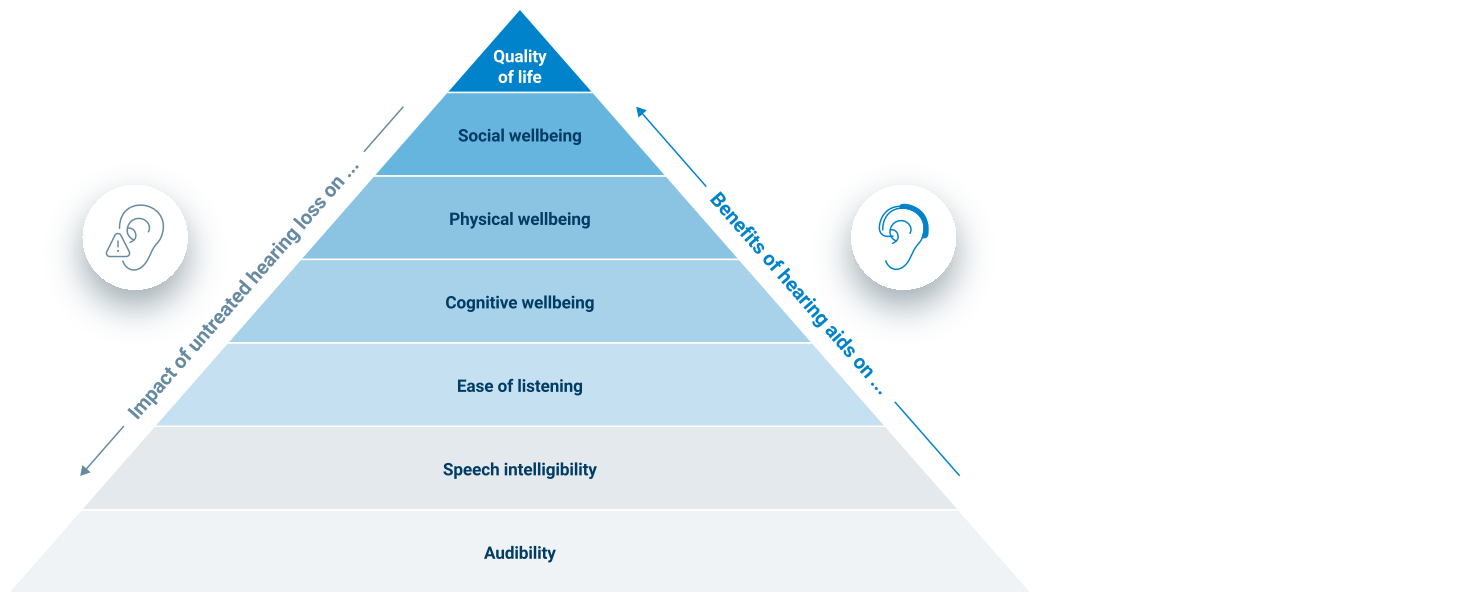
Through long-term partnerships with universities, research institutions, hospitals and companies, we use our holistic hearing care framework to generate more knowledge on the benefit of hearing care and to accelerate the translation of scientific evidence into clinical practices. In the 2025/26 financial year, we continued our in-kind support of the ACHIEVE (Aging and Cognitive Health Evaluation in Elders) study, led by the Johns Hopkins Bloomberg School of Public Health. The study was designed to determine whether treating hearing loss in older adults reduces cognitive decline over a three-year period. Recently, three peer-reviewed scientific papers were published, presenting additional findings such as that hearing intervention in older adults is associated with reduced social isolation and loneliness, a lower incidence of falls over three years, and cognitive benefits among individuals at higher risk of cognitive decline2. Recognizing the insights from this research, our Phonak brand continues to offer the ECHHO (Enhancing Cognitive Health via Hearing Optimization) training program, which covers the relationship between hearing loss and cognition, best practices for integrating cognition into the clinical conversation, and working with clients exhibiting signs of cognitive decline or dementia.
Our World of Hearing stores are lowering traditional barriers to hearing care, situated at approachable, high-visibility locations where people can explore hearing solutions at their own pace. The retail concept combines professional audiological services with a welcoming, consumer‑focused environment. A central feature is the experience room, where consumers can explore how different hearing solutions perform in everyday listening situations, such as restaurants or live‑music settings. This approach supports engagement across different age groups, including individuals who might not otherwise seek a hearing check, and encourages earlier interaction with hearing care. Our Retail business has 70 World of Hearing stores across five continents and more than 3,600 audiological clinics and stores worldwide. Innovation is not limited to our products: it also drives the way we approach the market through our Wholesale companies, distributors, and through our Retail network. By operating through many channels, we multiply consumersʼ potential paths to hearing.
Sonova continues to expand digital solutions that connect hearing care professionals and consumers across different stages of the hearing journey. These solutions include features such as health measurements, continuous data monitoring, and analysis of listening environments, which support more personalized hearing experiences and more targeted guidance for users. Integrated into and supporting Sonovaʼs products, digital solutions enhance access to professional hearing care, particularly in regions where access to hearing care professionals is limited or remote. In numerous countries, Sonova enables online or app‑based hearing screenings and supports remote hearing aid fittings and adjustments, as well as cochlear implant settings, allowing users to engage with their hearing care professionals without requiring an in‑person visit.
In the 2025/26 financial year, Sonova acquired the SilentCloudTM application, a digital solution for tinnitus management that provides evidence-based support for people experiencing bothersome tinnitus. Built on clinically proven protocols, the app combines tinnitus and hearing assessments, education, internet-based cognitive behavioral therapy, and sound therapy to support patients in managing their condition through a structured, self-paced program. SilentCloudTM is currently available in several European markets and had approximately 20,000 registered users at the end of the reporting period. The solution complements Sonovaʼs digitally enabled care offering by supporting earlier engagement and extending tinnitus care beyond the clinical setting through collaboration with ear, nose, and throat specialists.

Raising awareness for childrenʼs hearing care
In the 2025/26 financial year, Sonovaʼs World Hearing Day activities focused on childrenʼs hearing care, emphasizing the importance of early checks, prevention and supportive listening environments at home, in schools, and in communities. Awareness efforts highlighted the role of hearing in childrenʼs learning, communication, and participation. Activities included local events and a targeted prevention campaign providing guidance for families on recognizing early signs of hearing loss and the importance of understanding and support along a childʼs hearing journey.
Sonova Academy (formerly Audiological Care Academy), is a Group-wide initiative to elevate the education, certification, and continuous development of hearing care professionals worldwide. Aligned with Sonovaʼs vertically integrated business strategy— where deeper synergies accelerate innovation, strengthen market activation, and expand consumer reach — the Academy ensures consistent, high-quality standards of care across all markets. By building global HCP capabilities, Sonova supports improved access to hearing care. In 2025/26, Sonova Academy engaged over 5,000 HCPs in training programs on new products and on holistic hearing care topics such as tinnitus and cognition. Sonova Academy also oversees the Swiss International Hearing Academy (SIHA), a Sonova Group initiative offering a pioneering blended-learning program in audiology for aspiring HCPs worldwide, directly tackling the global shortage of HCPs. The program is designed to further strengthen individualsʼ expertise and make training available in countries where vocational education facilities are limited or non-existent. The program is offered over six or twelve months, with more than 1,350 hours of study. It includes instructor-led lectures, online modules, self-study, and clinical work. In 2025/26, the SIHA program was launched in India. Beyond SIHA, we established further education programs across multiple local markets. For example, in China, where the aging population has rapidly increased and the rising number of people with hearing loss has strained an already under-resourced hearing care system, we have trained more than 500 local HCPs through a six-month program. In addition, we offer various online training as well as advanced audiology trainings in our Sonova Grand Hearing Institute. In 2025/26, Sonova also launched a China-level Clinical Education Team to deliver structured internal education and collaborate with academic institutions, public organizations and key opinion leaders.
In the 2025/26 financial year, Sonova implemented a range of initiatives across multiple channels to raise awareness of hearing health. Sonovaʼs free online hearing tests have been available for many years and were completed more than 766,600 times in the 2025/26 financial year. In addition, Sonova regularly offers free hearing test days in its Retail locations. Awareness‑raising activities during the reporting period also included workshops and professional training programs. To support hearing loss prevention, Sonova offers a broad range of products across multiple sales channels, addressing different needs such as protection from occupational noise and solutions designed for recreational activities.
Performance metrics and targets
Accessibility
Key ESG target:
We initiate a Group-wide access to hearing care program in 2025/26.
During the financial year, various initiatives across Sonova were launched or continued, including awareness-raising campaigns, training of HCPs and further research with focus on the overall wellbeing benefits of hearing care through our holistic hearing care framework. However, no Group-wide program was launched for access to hearing care, and therefore, we have not achieved our target. We remain committed and see the need for a global program, which is why the target has been extended to the 2026/27 financial year.
Innovative hearing solutions
As part of our innovation process, we filed 44 new patent applications in the 2025/26 financial year across our businesses. By the end of the financial year, Sonova owned in total more than 2,000 active granted patent and design rights.
Patents and design rights
Data externally assured (limited assurance)
Number of active patents and new patent applications | ||||||
2025/26 | 2024/25 | 2023/24 | ||||
Number of active patents and design rights | > 2'000 | > 1'900 | > 2'000 | |||
New patent and design rights applications | 44 | 47 | 52 |
Training and education
During the 2025/26 financial year, 554 HCPs in low- and middle-income countries graduated from the SIHA program and further, 644 were enrolled.
SIHA graduates in low- and middle-income countries
Data externally assured (limited assurance)
Number of graduates in low- and middle-income countries1 | ||||||
2025/26 | 2024/25 | 2023/24 | ||||
SIHA graduates in low- and middle-income countries | 554 | 555 | 369 |
1)For definition and methodology see Sustainability note 4 - Other social topics.
Product quality, reliability, and safety
Strategy, governance, and IROs
Sonova is committed to delivering high-quality, reliable, and safe products that meet our consumersʼ expectations, while continuously striving for improvements. Product quality, reliability, and safety are defined as the personal health and safety of users and the reliable functioning of the product.
Material impacts, risks, and opportunities related to product quality, reliability, and safety:
IRO (risk assessed as if unmitigated) | Occurrence | Expected time horizon | ||
Positive impact: Social inclusion Reliable, well-functioning products of Sonova’s Cochlear Implants and Hearing Instruments segments, as well as the service delivery through the Retail business, can significantly contribute to the social inclusion of users of hearing instruments and cochlear implants. This, in turn, can also help raise awareness among other individuals with hearing loss who may also benefit from the technology. | Downstream | No change | ||
Risk: Loss of consumer trust There could be a loss of sales and market share if customer and consumer trust is lost due to quality or safety concerns. | Downstream | No change | ||
Risk: Product exchanges and recalls If faulty or unreliable products enter the market there is a risk of costly repairs, fines, or product recalls. | Downstream | No change | ||
Risk: Product-related chemical requirements Legal requirements are becoming stricter and more fragmented, leading to a risk of non-compliance and subsequent fines. | Downstream | Increase in medium- to long-term |
Sonova integrates quality, reliability, and safety considerations throughout the entire product life cycle, from research and product design to development, manufacturing, and post-market use. By closely monitoring our markets and applying relevant design-for-reliability principles, we ensure that product quality is embedded from initial design through to manufacturing. Sonovaʼs hearing instruments and cochlear implants are regulated globally by government agencies, healthcare authorities, and other regulatory bodies that verify our compliance across the full product life cycle. We maintain transparent, constructive, and professional relationships with applicable regulatory authorities on matters related to policy, product submissions, compliance, and product performance.
Each of our businesses operates under a dedicated quality framework addressing quality, reliability, and safety, tailored to the specific requirements of each product. These frameworks enable timely identification of issues and support prompt, data-driven improvement actions. We comply with key regulatory requirements, including design controls, marketing approvals, good manufacturing practices, vigilance systems, clinical studies, and other applicable regulations, standards, and normative documents. To support effective implementation, we have established quality management systems where applicable, along with cross-functional quality, safety, and reliability teams. Performance metrics are reviewed monthly within each business to drive continuous improvement and ensure regulatory compliance. Oversight is provided through regular reporting to the Group Executives and at least annual updates to the Board of Directors, supporting strategic alignment and accountability.
In addition, Sonova conducts internal audits to assess the effectiveness of its quality management systems and their conformity with ISO standards, FDA regulations, relevant European legislation, and country-specific requirements, including the Medical Device Single Audit Program (MDSAP). Defined procedures govern audit planning, execution, reporting, and record-keeping. Audit findings, corrective actions, and follow-up activities are documented, reviewed, and analyzed to identify trends and further strengthen product quality, reliability, and safety.
Policies and actions
Sonovaʼs policies and standard operating procedures for quality, reliability, and safety are designed to ensure compliance with regional and global regulations while fostering a strong quality culture across the organization. In 2024, we introduced a new quality policy for Hearing Instruments, which serves as the primary framework guiding our quality standards. The policy applies to all operational sites and has been approved by our CEO. For hearing instruments, our procedures comply with healthcare authority requirements in each market where products are distributed, including the European Unionʼs Medical Device Regulation (EU) 2017/745, the Radio Equipment Directive 2014/53/EU, and U.S. Food and Drug Administration requirements for Class I hearing aids, Class II wireless hearing aids, and over-the-counter hearing aids.
Cochlear implants and their accessories comply with healthcare authority requirements relevant to each territory in which they are distributed. For example, in the European Union new products are compliant with the Medical Device Regulation (MDR) 2017/745 and are subject to a technical documentation review before receiving the mandatory conformity (CE) marking and being placed on the market. Similarly, in the United States, cochlear implants are classified as Class III medical devices and subject to pre-market approval, where the FDA evaluates the safety and effectiveness of these devices before commercialization. Sonova carefully monitors changes in the relevant worldwide regulatory environment to ensure that its products always conform.
Across all product categories, we assess potential safety-related risks using a systematic process to identify, evaluate, control, and monitor risks throughout the product life cycle. Hearing instruments and cochlear implants are governed by ISO 14971, which specifies the application of risk management to medical devices. To maintain up-to-date regulatory and statutory knowledge, employees participate in both initial and ongoing training programs. Role-specific training is delivered through our learning platform to build awareness of quality and reliability topics, complemented by general training on quality management systems, health, environment, and safety, as well as additional in-depth training as required. Our operations centers for hearing instruments and cochlear implants, along with major Group Companies, maintain quality management systems certified in accordance with ISO 13485, the internationally recognized standard for medical devices. Many sites participate in the Medical Device Single Audit Program (MDSAP), which covers regulatory requirements in Australia, Brazil, Canada, Japan, and the United States. Operations centers manufacturing products for the European market also comply with the requirements of the European Medical Device Regulation (EU) 2017/745. Annual third-party audits are conducted at all ISO 13485-certified operations centers and major Group Companies to ensure continued compliance across manufacturing, management systems, materials, components, and finished products.
Product quality, reliability, and safety are fully integrated into our research, design, and development processes. From the outset, we document design inputs, including functionality, performance, quality, safety, intended use, clinical and consumer needs, applicable statutory and regulatory requirements, and environmental considerations. Any changes to design inputs follow the same approval process as the original inputs. We conduct in-house testing to verify and validate designs, alongside external third-party testing to demonstrate compliance with applicable standards and regulatory requirements. Once products enter commercial distribution, they are continuously monitored to maintain quality, safety, and effectiveness, and to identify potential for improvements. Methods include complaint handling, post-market surveillance, vigilance reporting, reliability trending analysis, and post-launch engineering activities. We comply with unique device identification requirements to ensure unambiguous device identification and traceability in accordance with local regulations. Product quality performance is also incorporated into supplier evaluation, with additional risk-based measures applied where necessary.
Customer and consumer complaints are systematically documented, reviewed, and analyzed to identify trends related to product quality, reliability, safety, and performance. Early signals of potential issues are used as inputs for corrective and preventive actions, supported by risk analysis and health hazard evaluation where applicable. Records of complaints and investigations are maintained, and where a complaint incorporates the actions of external parties, we engage with the relevant supplier. Regulatory authorities are notified in accordance with national and regional requirements when advisory notices, recalls, or reportable adverse events occur.
The transition of key manufacturing and service sites to a multi‑site ISO 13485 certificate was completed in 2024 and further extended to include additional sites in the 2025/26 financial year. This certification supports the consistent application of standardized processes across key sites, strengthens operational effectiveness, and enables innovation and growth. The multi-site certificate reflects Sonovaʼs commitment to maintaining high standards of quality, reliability, and safety across the organization.
Performance metrics and targets
Product quality and reliability
Key ESG targets:
We improve the product reliability rate by >20% year-over-year for hearing instruments.
We improve the product reliability rate by >20% year-over-year for cochlear implants (externals).
The reliability rate for hearing instruments declined by 6.6% year‑on‑year and remained below the defined target. This development largely reflects a higher share of customized products, which typically require more individualized handling and servicing. In response, Sonova has implemented targeted measures to further improve product robustness and strengthen service processes. These actions are intended to address the underlying drivers and support a gradual improvement in reliability over time, alongside the ongoing enhancement of our reliability capabilities.
For cochlear implant external processors, reliability improved by 13.9% compared to the prior year, although the result did not yet fully meet our target. This performance builds on a positive multi-year trend and reflects continued progress in enhancing product quality and durability.
Product reliability rates year-over-year improvements
Data externally assured (limited assurance)
Improvement vs. previous year1 | ||||||
2025/26 | 2024/25 | 2023/24 | ||||
Improvement of hearing instruments product reliability rate | (6.6%) | 10.0% | 7.0% | |||
Improvement of cochlear implants product reliability rate | 13.9% | 16.3% | 14.0% |
1)For definition and methodology see Sustainability note 4 - Other social topics.
In the 2025/26 financial year, Sonova voluntarily initiated three field actions within its cochlear implants (CI) business. These actions affected one model of sound processor (two units) and two selected accessories (battery chargers and battery packs). All field actions were undertaken proactively and on a voluntary basis. The recalls have been publicly disclosed, and information is available through the relevant regulatory authorities in the countries concerned, including the U.S. Food and Drug Administrationʼs Medical Device Recall database. These actions reflect Sonovaʼs approach to patient safety, transparency, and continuous improvement across our operations. During the reporting year, Sonovaʼs global facilities were inspected by multiple regulatory authorities, with no enforcement actions issued in relation to Good Manufacturing Practice (GMP) compliance.
Hearing Instruments (HI) and Cochlear Implants (CI): Product safety indicators1
Data externally assured (limited assurance)
2025/26 | 2024/25 | 2023/24 | ||||||||||
HI | CI | Total | HI | CI | Total | HI | CI | Total | ||||
Number of recalls | 0 | 3 | 3 | 0 | 0 | 0 | 0 | 0 | 0 | |||
Products listed in any public medical product safety or adverse event alert database | 0 | 3 | 3 | 0 | 0 | 0 | 0 | 0 | 0 | |||
Number of fatalities associated with products | 0 | 0 | 0 | 0 | 0 | 0 | 0 | 0 | 0 | |||
Number of enforcement actions taken in response to violations of good manufacturing practices (GMP) or equivalent standards | 0 | 0 | 0 | 0 | 0 | 0 | 0 | 0 | 0 | |||
Number of regulatory agency inspections | 13 | 11 | 24 | 15 | 11 | 26 | 13 | 4 | 17 |
1)For definition and methodology see Sustainability note 4 - Other social topics.
Ethical marketing and sales practices
Strategy, governance, and IROs
At Sonova, we are committed to ethical marketing and sales practices towards all our customers and consumers, across all our businesses and channels. Ethical marketing and sales practices are defined as responsible marketing practices, accurate and comprehensible marketing statements, advertising, and labeling of products and services, as well as non-discriminatory and non-predatory selling practices.
Material impacts, risks, and opportunities related to ethical marketing and sales practices:
IRO | Occurrence | Expected time horizon | ||
Positive impact: Access to quality information Well informed HCPs, consumers, and care givers lead to greater empowerment and better health outcomes. | Downstream | Increase in short-, medium-, long-term |
Sonova promotes ethical marketing and sales practices by implementing rigorous compliance measures and structured training programs. We help people make informed choices and contribute to improved hearing healthcare in society by educating and guiding hearing care professionals (HCPs) and by giving consumers access to trustworthy information.
Due to differing risks by product type, Sonova has two distinct governance structures for marketing and sales practices: one covering medical devices, including related accessories and services, and one for non-medical devices. Compliance with regulatory and scientific standards for product performance claims is assured through an interdisciplinary and cross-department development activity, involving functions such as Marketing, Research and Development, Clinical Affairs, and Legal. Our Executive Committee oversees these functions and the Chief Legal and Compliance Officer leads legal governance, including brand intellectual property and compliance, with support from senior legal experts. The Group Executives and Board of Directors are regularly informed about relevant topics including clinical and claims research, regulatory and scientific compliance of product performance, and status of freedom to operate regarding Intellectual Property Rights (IPR).
Policies and actions
Our commitment to ethical marketing and sales practices is embedded in our Code of Conduct and detailed in relevant policies, guidelines, and standard operating procedures. Our Anti-Bribery Policy and its related standard operating procedures and country-specific guidelines define how we should interact in an ethical manner with HCPs (e.g., audiologists and acousticians, professors, surgeons, ear, nose and throat specialists, and researchers). We continually interact with HCPs in various roles and settings, and our cooperation with them is governed by our Four-Leaf Clover Principles:
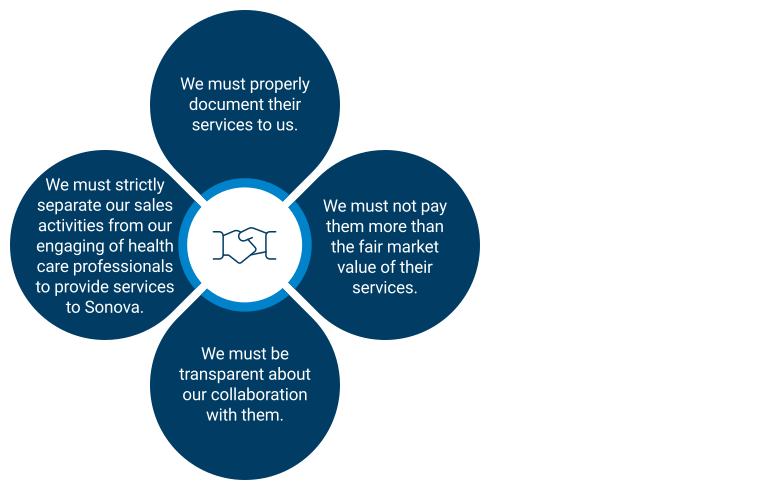
Our mandatory Code of Conduct training covers the principles of anti-bribery compliance and ethical conduct. Further dedicated anti-bribery training is mandatory for employees in defined roles (including sales, marketing, and finance, as well as for Group company roles such as Managing Directors and company controllers). This yearʼs anti-bribery training included general details on false claims compliance. Our standard operating procedures (SOPs) for claims management clearly outline how to develop safety, performance, and benefit claims for both medical devices and non-medical devices (including their related accessories and services), in compliance with global regulatory requirements. All claims related to medical devices undergo a standardized review and approval process before being disseminated, to ensure that sufficient evidence is available, and that the claims meet quality and global regulatory compliance standards. Mandatory training is assigned annually to employees from relevant functions who are identified as having responsibilities under our claims management procedures.
Sonova upholds the ethical principles contained within the Declaration of Helsinki and applies ISO 14155 consistently when engaging in clinical trials. This standard is fully integrated into Sonovaʼs procedures, which outline clear processes for securing participantsʼ free, prior, and informed consent. Before initiating any clinical trial, we perform comprehensive risk and impact assessments and maintain systematic monitoring throughout the trial lifecycle. Employees engaged in these clinical activities receive training in Good Clinical Practice (GCP) and relevant procedures, supported by monthly clinical affairs expert sessions.
Sonovaʼs reporting platform, SpeakUp, is available for all stakeholders to submit (anonymously where desired) concerns about potential violations of marketing and sales ethics. For further details about SpeakUp, see the Business ethics section.
Performance metrics and targets
Sonova set a new target focused on Anti-Bribery Policy training during the 2025/26 financial year. Additional details on this target performance are available in the Business ethics section.
In the 2025/26 financial year, there were no monetary losses because of legal proceedings associated with misleading marketing claims. All clinical claims have been sufficiently substantiated for Sonovaʼs hearing instrument brands as well as for cochlear implants.
Data privacy and digital ethics
Strategy, governance, and IROs
We are committed to operating ethically, in compliance with regulations, and ensuring that we protect the data of customers, consumers, business partners, employees, and other stakeholders. Data privacy and digital ethics refer to the responsible, transparent, and ethical collection, processing, and governance of personal and non-personal data; the protection of data subjectsʼ privacy and safeguarding of sensitive data; and the ethical development and use of digital technologies, including artificial intelligence (AI), to promote fairness and transparency, and to build stakeholder trust.
Material impacts, risks, and opportunities related to data privacy and digital ethics:
IRO (risk assessed as if unmitigated) | Occurrence | Expected time horizon | ||
Risk: Data protection Non-compliance with data protection obligations may lead to financial fines and/or supervisory authorities ordering the suspension of specific processing activities. | Own operations and downstream | Increase in medium- to long-term |
We have established organizational and technical safeguards to protect the personal data we collect and process, as well as to mitigate the evolving threat of data breaches and cyber-attacks. We comply with applicable data protection laws and regulations wherever we operate, and we monitor developments in national and international data protection law.
The principles of privacy by design and default are a central aspect of our product development and business processes. Sonovaʼs Global Privacy function is responsible for overseeing compliance with data protection laws and regulations, defining and maintaining the Sonova Data Protection program and framework, and providing training and guidance to our business functions and employees in order to embed privacy and substantiate accountability. To support this, a network of Data Privacy champions facilitates privacy protection at the Group company level. Both the Global Privacy and Internal Audit teams monitor program and policy effectiveness, while the Data Protection program continuously evolves to meet the changing legal landscape. At Sonova, we employ AI technology solely to create benefits for our customers and users of our products. To ensure ethical and compliant use of AI, Sonova has defined a dedicated AI governance framework to ensure a responsible integration of digital technologies. The AI governance framework is regularly updated as technology and regulatory landscape evolve. In the 2025/26 financial year, we have newly implemented a Technology and Innovation Committee of the Board of Directors. This committee provides oversight of the Groupʼs innovation and AI strategies, supporting effective governance of technological development and its alignment with evolving consumer needs.
Sonovaʼs Chief Information Security Officer (CISO) holds global responsibility for information security across all regions, businesses, and functions, covering IT, operational, and product cyber security domains. The Information Security function defines the information security strategy and roadmap. The Information Security function defines the information security strategy and roadmap, establishes governance structures to identify, manage, and escalate cyber and information security risks, and develops policies, guidance, and support for the business. The Information Security function reports directly to the Group CFO. Group Executives and the Board of Directors receive regular updates on information and cyber security matters, while risks and mitigation actions are reported to the Audit Committee through the enterprise risk management process.
Sonova applies a structured information security approach, supported by successive action plans to address cyber security risks with the highest potential business impact. This approach prioritizes critical risks and supports effective risk management. With oversight and support from the Group Executive Management, Sonovaʼs information security framework is designed to safeguard operations, products, and customer data.
Policies and actions
Sonovaʼs Group Data Privacy Policy defines how personal data is processed and protected across the Group and sets out the core principles and commitments applied to ensure compliance with applicable data protection laws. The policy applies to all Sonova Group Companies and their employees and business partners globally. The policy is complemented by standard operating procedures and guidelines to provide more detailed guidance on specific data protection, privacy topics, and privacy notices. Sonova deploys mandatory annual online training for all employees, complemented by on- and offline training for specific departments and teams, along with webinars, and communication platforms for knowledge exchange. Training courses cover essential legal principles and requirements, including Sonovaʼs Data Privacy Policy and such legal frameworks as the EU General Data Protection Regulation (GDPR), the Health Insurance Portability and Accountability Act (HIPAA), the California Consumer Privacy Act (CCPA), the Personal Information Protection and Electronic Documents Act (PIPEDA), and relevant Chinese data protection and security laws.
Sonovaʼs Global Information Security Policy mandates key information security principles, roles, and responsibilities. It is complemented by a set of directives, standards, and guidelines which govern cyber security for functions and subsidiaries controlled by Sonova, covering areas such as the acceptable and secure use of information and information systems, and the cyber security of our products. This information security policy framework is regularly reviewed, updated, and supplemented to address evolving information technology and cyber security risks. Sonova regularly tests its disaster recovery plans and applies defined incident response procedures. In addition, independent security assessments are performed by external providers. For areas with elevated risk exposure, proactive penetration testing is conducted annually by qualified external specialists. Sonova also conducts regular internal security assessments and maintains an ongoing vulnerability management process. In addition, Sonova maintains an information security risk insurance policy.
Sonova maintains a global information security awareness program designed to foster a company‑wide cyber security culture and reinforce information security as a shared responsibility. The program includes mandatory training for all employees, targeted awareness training for specific functions, global and local campaigns, and regular cyber‑resilience exercises. During the 2025/26 financial year, Sonova conducted an Information Security Awareness Month, featuring communications, training sessions, and engagement activities for employees worldwide, including an onsite event at the headquarters in Stäfa, Switzerland. These initiatives focused on emerging cyber risks, such as risks related to artificial intelligence and deepfakes, with the objective of strengthening employee awareness of information security topics relevant to the Groupʼs operations.
Performance metrics and targets
Key ESG targets:
We achieve an annual on-time employee Data Privacy training completion rate >95%.
During the 2025/26 financial year, we launched the Data Privacy training for all employees. The target was achieved with an overall on-time completion rate of 98.6%.
Data privacy training
Data externally assured (limited assurance)
% of employees that completed the Data Privacy training on time1 | ||||||
2025/26 | 2024/25 | 2023/24 | ||||
On-time Data Privacy training completion rate2 | 98.6 |
1) For definition and methodology see Sustainability note 4 - Other social topics.
2)Program was launched in the 2025/26 financial year, no comparable data for prior years.
In the 2025/26 financial year, we did not experience any substantiated claims from regulatory bodies or outside parties regarding information security or data breaches.
Breaches overview
Data externally assured (limited assurance)
Number | ||||||
2025/26 | 2024/25 | 2023/24 | ||||
Number of information security breaches or other cyber security incidents | 0 | 0 | 0 | |||
Number of substantiated complaints concerning data breaches | 0 | 0 | 0 |