Double materiality assessment
Sonova performs a full double materiality assessment (DMA) every third year, involving a wide range of stakeholders chosen for their interest in, or influence on, Sonovaʼs business model and strategy. In the intervening years, we conduct an internal review of the previous assessment. In the 2023/24 financial year, we performed a full DMA involving over 100 internal and external participants. The 2025/26 DMA builds on the 2023/24 and 2024/25 assessment results, which we reviewed and adjusted with input from 21 internal topic managers and experts. The DMA covers the Sonova Group, including all businesses and its value chain. In the coming financial year, we will conduct a full DMA, together with the update of our sustainability framework. Further details can be found in the Sustainability strategy and governance section.
In the 2025/26 financial year, we conducted the DMA by completing the following four steps:
1. Input factors review: We used the shortlisted topics from prior yearsʼ DMAs, which were mapped to the European Sustainability Reporting Standards (ESRS) topics listed under Application Requirement (AR) 16 at the sub-topic level. The first step of the 2025/26 DMA was a structural review of the existing input factors: we examined Sonovaʼs corporate strategy to identify evolving business priorities and objectives that could influence material topics, and analyzed the value chain to confirm that key activities and their impacts remained fully captured. We also reviewed our stakeholder mapping to ensure that all relevant groups and expectations were represented. We conducted a regulatory scan to identify new and emerging Sustainability requirements, analyzed industry trends, and benchmarked our material topics through a peer review.
2. Review of impacts, risks, and opportunities (IROs): In the next stage of the 2025/26 DMA process, we reviewed the impacts, risks, and opportunities (IROs) identified during 2024/25 DMA. The Corporate Sustainability team first conducted targeted desk research to analyze the existing IROs. Afterwards, the team and 21 internal topic managers and experts jointly reviewed each IRO, determining whether it continued to reflect actual or potential impacts and whether its associated financial risks and opportunities were still appropriately linked. As part of the review, we updated the IRO wordings, merged related IROs to improve coherence, recalibrated the IRO scores and added one additional opportunity.
3. Review of materiality calculation: We then re-evaluated the score assigned to each IRO in 2024/25. The topic owners reviewed the previous scores and confirmed or modified them as appropriate, applying uniform scoring methodology to ensure consistency. Topic experts used a scoring format for materiality with a scale of 1 – 5, 5 being the highest. The criteria considered for impact materiality were severity and likelihood, where severity is made up of scale, scope, and, for negative impacts, irremediability. The criteria considered for financial materiality (risks and opportunities) were magnitude and likelihood, and risks were assessed without taking into account existing or planned mitigating actions. This is in line with Sonovaʼs enterprise risk management (ERM) risk assessment process, and individual risk thresholds applied when identifying sustainability risks corresponded to the thresholds applied in ERM. Connections between potential negative impacts and risks were discussed and analyzed with the topic experts. To calculate severity of impacts, we took the average score across scale, scope, and irremediability. We conducted a sense-check to ensure that no negative human rights impacts were masked by taking an average score, understanding that severity (with a particular focus on irremediability) should take precedence over likelihood. We took into account the results from existing due diligence processes in both impact identification and assessment. We defined the topic scores by the highest-scoring IRO related to each topic. The materiality threshold was defined to account for all topics that scored ʼhighʼ materiality on one of the two perspectives. This means that the threshold was set at 20 and above for IROs, based on the relative distribution of topics to ensure the appropriate extent of disclosures. Upon conclusion of the DMA process, we mapped the material topics against the ERM risk landscape.
4. Governance review and approval: In the final stage of the 2025/26 DMA process, the updated list of material topics, the reviewed IROs and the scoring results underwent governance review and approval by Sonovaʼs senior leadership. The ESG Council and the Group Executives reviewed the process and its findings, providing input on strategic alignment and relevance. The process concluded with the approval of the DMA by the Audit Committee.
Material sustainability-related impacts, risks, and opportunities (IROs)
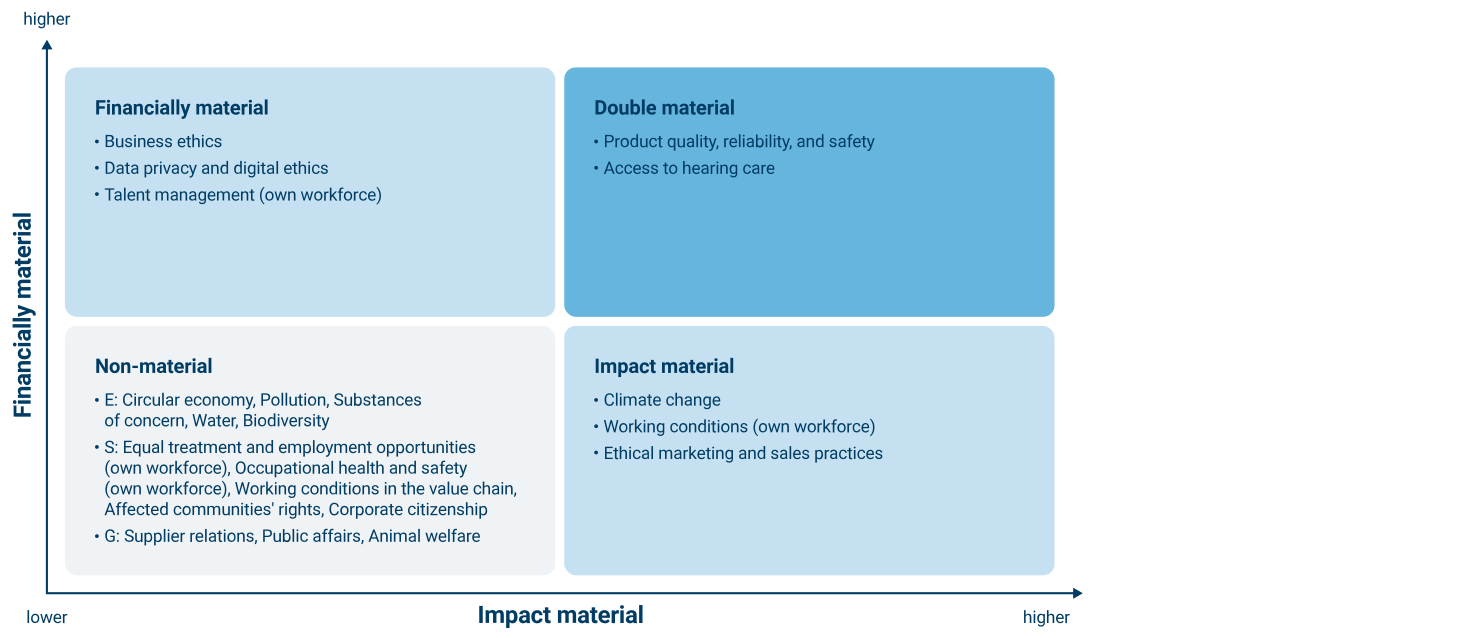
The matrix and table above summarize the identified material topics and IROs. They relate to all of Sonovaʼs business units and geographies, except when mentioned otherwise. More detailed information can be found in the topical sections throughout this report.
Material ESG topics and descriptions of IROs (in order of ESRS):
Sonova topic | IRO (risk assessed as if unmitigated) | Occurrence | Expected time horizon | |||
|---|---|---|---|---|---|---|
Negative impact: Greenhouse gas emissions Greenhouse gas emissions from energy used for own operations and production by suppliers contribute to climate change, leading to further negative environmental impacts. | Entire value chain | Increase in medium- to long-term | ||||
Risk: Attraction and retention Lack of training and skills development as well as career and development opportunities could negatively affect talent recruitment and retention, hence negatively influence the ability to innovate, risking the viability of the business. | Own operations | Increase in medium- to long-term | ||||
Positive and negative impact: Employee wellbeing Sonova’s working conditions can impact on employees and their families. Depending on the nature of this impact, this can have a stabilizing or destabilizing effect on the employees, their families and their communities. | Own operations | No change | ||||
Positive impact: Improving the quality of life Access to hearing care improves the quality of life of individuals with hearing loss through the provision of social, emotional, and cognitive benefits (e.g., social inclusion, economic productivity). Family members and carers can also be positively impacted. | Downstream | Increase in short-, medium-, long-term | ||||
Positive impact: Addressing health care costs Untreated hearing loss can have harmful effects on health and wellbeing and is associated with high costs for our healthcare systems. By treating their hearing loss, users of hearing instruments and cochlear implants can maintain their wellbeing and potentially address health-related risks. | Downstream | Increase in short-, medium-, long-term | ||||
Opportunity: Core business The provision of access to hearing care continues to be Sonova’s core business and hence represents a significant business opportunity. | Own operations and downstream | Increase in short-, medium-, long-term | ||||
Positive impact: Social inclusion Reliable, well-functioning products of Sonova’s Cochlear Implants and Hearing Instruments segments, as well as the service delivery through the Retail business, can significantly contribute to the social inclusion of users of hearing instruments and cochlear implants. This, in turn, can also help raise awareness among other individuals with hearing loss who may also benefit from the technology. | Downstream | No change | ||||
Risk: Loss of consumer trust There could be a loss of sales and market share if customer and consumer trust is lost due to quality or safety concerns. | Downstream | No change | ||||
Risk: Product exchanges and recalls If faulty or unreliable products enter the market there is a risk of costly repairs, fines, or product recalls. | Downstream | No change | ||||
Risk: Product-related chemical requirements Legal requirements are becoming stricter and more fragmented, leading to a risk of non-compliance and subsequent fines. | Downstream | Increase in medium- to long-term | ||||
Positive impact: Access to quality information Well informed HCPs, consumers, and care givers support greater empowerment and better health outcomes. | Downstream | Increase in short-, medium-, long-term | ||||
Risk: Data protection Non-compliance with data protection obligations may lead to financial fines and/or supervisory authorities ordering the suspension of specific processing activities. | Own operations and downstream | Increase in medium- to long-term | ||||
Risk: Changing and fragmented regulatory landscape The regulatory environment is evolving rapidly and becoming increasingly fragmented across markets. Failure to comply with existing or emerging regulations in a timely manner could result in reputational damage, fines, and loss of business. | Entire value chain | Increase in short-, medium-, long-term | ||||
Risk: Ethical behavior Unethical business conduct may result in reputational damages, legal action, fines, loss of our licenses and loss of business. | Entire value chain | Increase in short-, medium-, long-term | ||||
Risk: Protection of whistleblowers Whistleblowers play a critical role in upholding ethical conduct. Inadequate protection of whistleblowers may expose the company to reputational damage and legal risks. | Entire value chain | No change |
Non-material short-listed topics included the following: affected communitiesʼ rights, animal welfare, biodiversity, circular economy, corporate citizenship, equal treatment and employment opportunities, occupational health and safety, pollution, public affairs, substances of concern, supplier relations, water, and working conditions in the value chain.
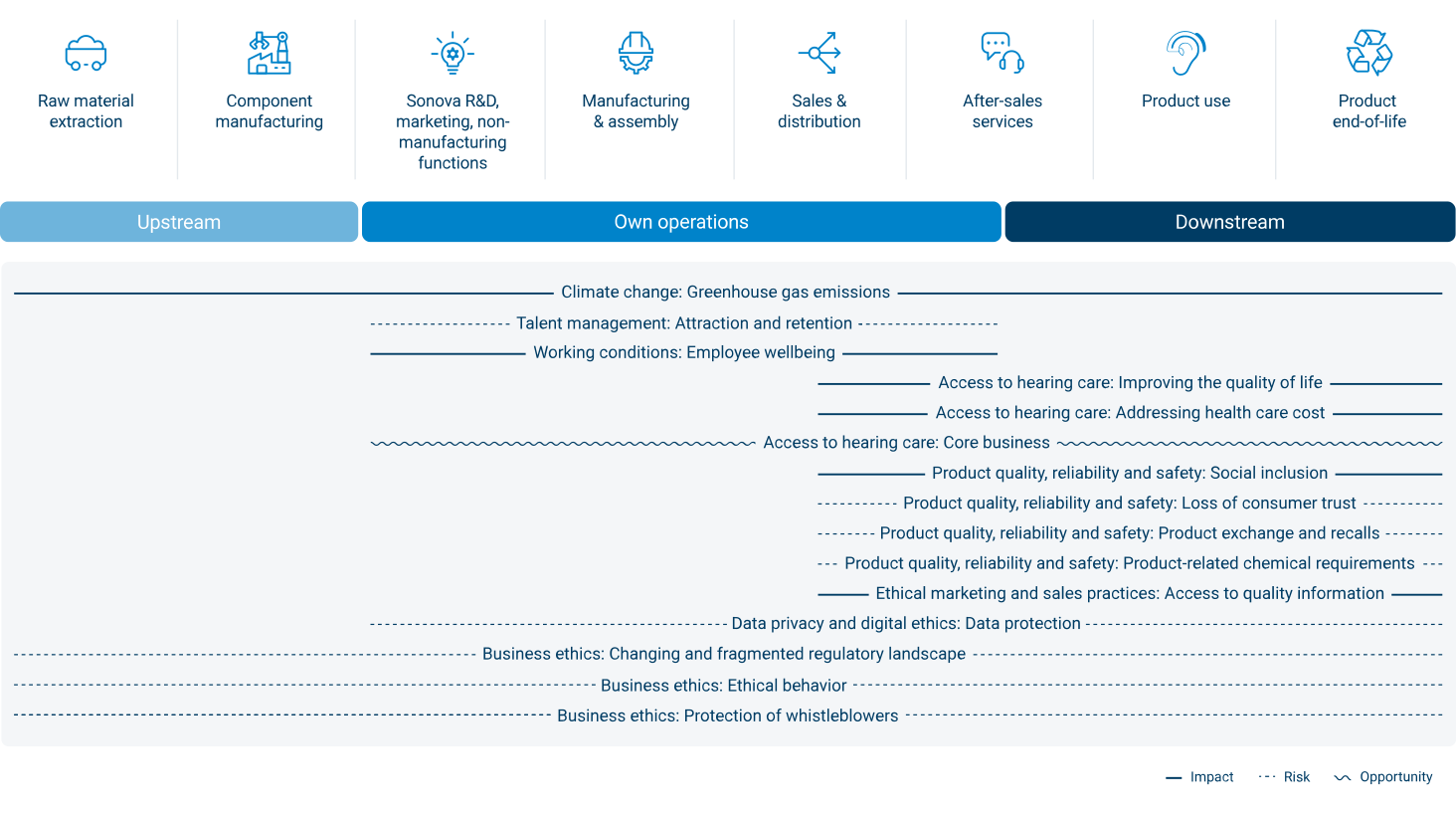
The material DMA topics and the related IROs extend across Sonovaʼs businesses and strategy. Further information can be found in the Our strategy section. They can be mapped to the value chain as follows:
Changes since the previous reporting period
Changes in topics and materiality from the previous year to 2025/26 include:
- We renamed and amended “Diversity and inclusion” – used in the prior year assessment – to “Equal treatment and employment opportunities.” The topic remains non-material and is included within the “Our employees” chapter.
- We included “Awareness raising on hearing health” as a subtopic under “Access to hearing care.” Access to hearing care remains material.
- We re-assessed and rephrased the content of material IROs across the topics of “Climate change”, “Working conditions”, “Access to hearing care”, “Ethical marketing and sales practices”, “Data privacy and digital ethics”, and “Business ethics”.